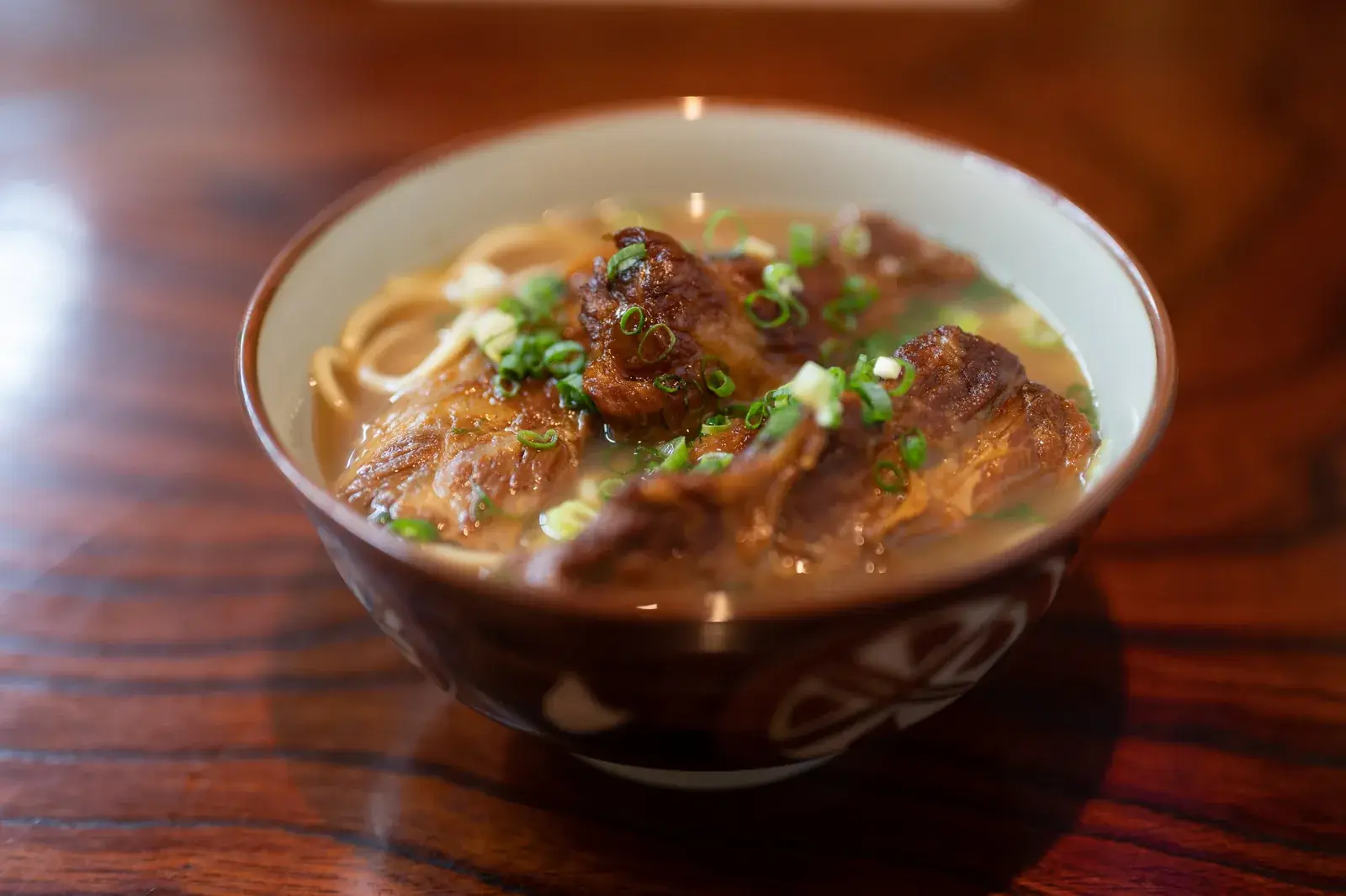
A few dishes to get to know.
Yaeyama soba is a good starting point: wheat noodles in broth, commonly served with pork, fish cake and spring onion. Despite the name, these are different from the buckwheat soba many visitors know from elsewhere in Japan. Recipes and toppings vary, which makes trying another bowl part of the pleasure.
Look out too for goya champuru, a stir-fry built around bitter melon, and Yaeyama kamaboko, the island-style fish cake. Choose according to your appetite and interests.
See what the island grows and makes.
A market visit helps put ingredients into context. Pineapple, mango, vegetables, seaweed products and black-sugar sweets are among the foods explored in DiscoverYaima's guide. Availability changes with the seasons, so ask what is locally grown or made during your stay.
On a restaurant table, you may notice pīpāchī, an aromatic long pepper, or kōrēgusu, chillies steeped in awamori. They bring different flavours to a meal. Everyday shopping is interesting too: island produce sits alongside goods that arrive from elsewhere by sea or air. Both belong to the way people eat here now.
Three places we still enjoy.
Joo Chiat, Papiru and Pinacolada remain personal recommendations that we still visit and enjoy. Joo Chiat belongs with a day in Kabira; Papiru is a cake shop and café in Shiraho; Pinacolada is a bakery to keep in mind when planning your time on Ishigaki.
The linked stories describe each place in more detail. Use them to decide what fits your day, then check the business's current opening information before making a special journey. An older account of a meal captures that visit, while today's menu and hours may be different.
Follow an ingredient back to its maker.
Awamori is a distilled rice spirit with an important place in Okinawan food culture. Our visit to Ikehara Distillery on Ishigaki became a hands-on introduction to steamed rice, black koji and a craft carried through a family's generations.
Her story follows the work and the people behind the bottle. It offers another way to understand island food and the making traditions around it. The same curiosity can shape a meal: learning where an ingredient comes from often makes it more memorable.
Make the practical part of eating out easy.
Think about meals when choosing where to stay, especially away from the city. If there is somewhere you particularly want to eat, check current opening days, reservation arrangements and payment methods with the business. Keep a little flexibility for a change of plan or something that catches your interest.
For dietary needs, discuss ingredients directly with the kitchen. Broths, sauces and toppings deserve attention as well as the main dish. Use DiscoverYaima's food stories for ideas, then confirm the details that matter to you. A small local diner, a bakery, an international restaurant and a more elaborate meal can all be part of an enjoyable stay.