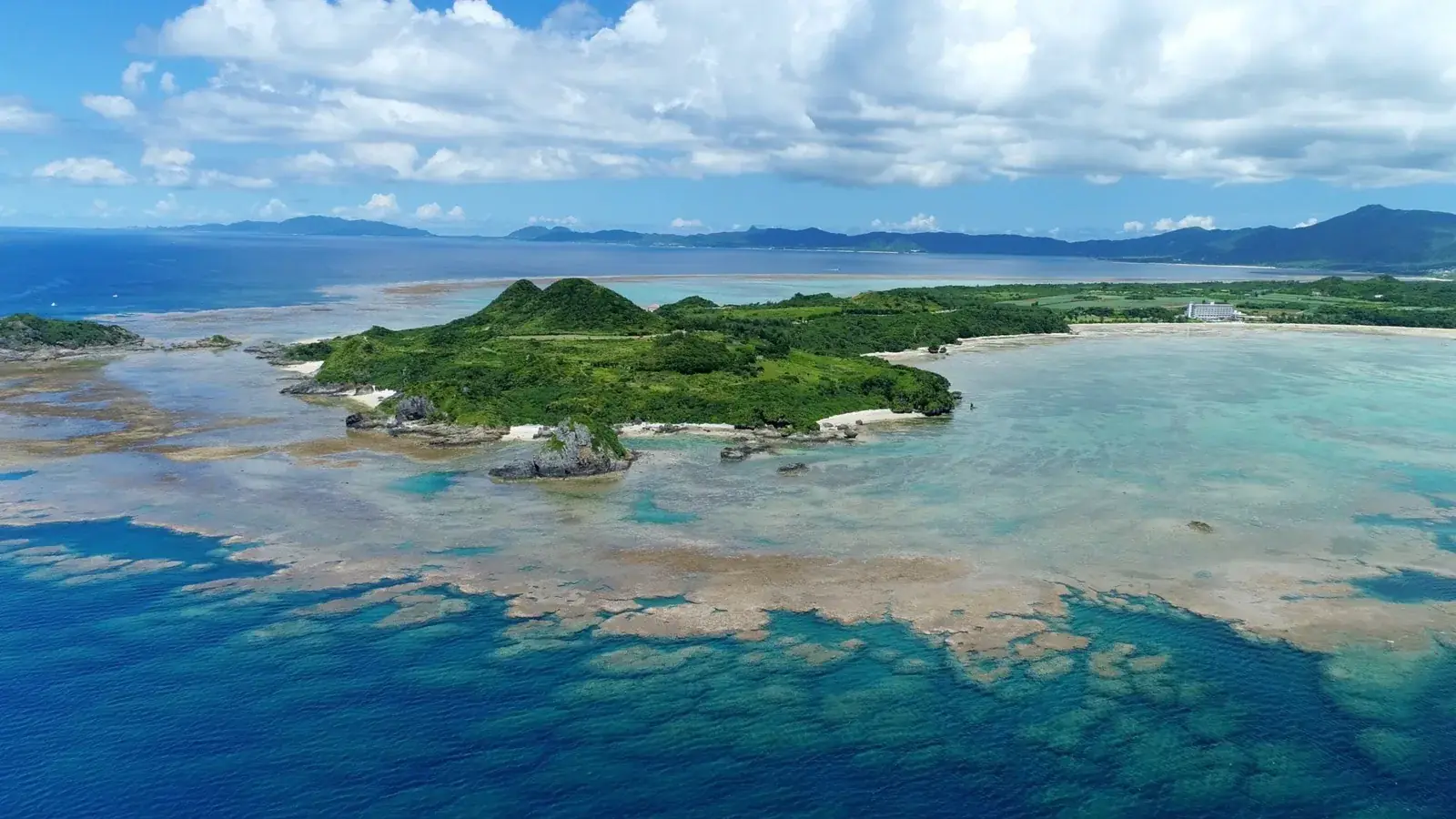
The colours are never the same twice.
The mountains and the jungle make the strongest impression on me. On a clear day, driving along Ishigaki's country roads, the sky can look intensely blue against almost luminous green grass. The jungle feels lush and alive, yet often surprisingly gentle and inviting.
The light changes the landscape. Summer light can be warm and yellow; as autumn approaches it becomes cooler. A grey winter day can turn the same sea and hills into muted blue-green. Ishigaki is beautiful in bright sunshine, but its changing moods are part of what keeps the island interesting.
Let the mangroves slow you down.
A mangrove visit is one of the experiences we most strongly recommend. From the water you notice the roots, the changing tide and the small signs of life between river and sea. The sounds and stillness of the mangroves reveal another side of the islands.
The seaward edge of the mangroves is interesting at every time of day. Once you move among the roots, you often become quiet without deciding to. In that stillness, small sounds suddenly stand out: a drop of water, crabs moving nearby or the call of a bird you would never hear in the city.
It makes you stop for a moment and realise that we are only a small part of this place, and that nature is much stronger than we are. A guided kayak or nature outing can help you enter this environment carefully and notice what you might otherwise miss.
Make time for the small places.
Some nature experiences fit easily into a shorter day. At Yonehara, a short path leads into a grove of native Yaeyama palms. It takes little time, but stepping beneath those leaves makes the subtropical landscape feel very close.
We like to combine the walk with a stop at the small shop opposite. We have had sugarcane juice served warm there in winter: comforting in the same way as hot chocolate, but completely of this place. Small stops like this often stay with us as clearly as the famous views.
The sea can still feel unreal.
The clarity and colour of the sea made me think, on my first visit, that this must be paradise. In the right conditions you may see fish below the surface, and sometimes turtles. The colour, movement and scale of the water are memorable on their own.
We recommend snorkelling with a responsible local guide. Conditions change, and a guide can choose an appropriate place while helping you move carefully around living coral and marine life.
Meet Iriomote's rare wildcat.
The Iriomote Wildlife Conservation Center is a worthwhile stop, especially with children. Its displays introduce the island's habitats and explain why the endemic Iriomote wildcat is so rare and vulnerable.
You are unlikely to see an Iriomote wildcat in the wild, but the centre helps you understand how it lives and why protecting the forest and driving carefully matter.
Don't bring natural finds
There are few public rubbish bins on the islands. Take every bottle, wrapper and piece of waste back to your accommodation, then separate and dispose of it correctly there. We have seen how one abandoned bottle can quickly become a pile when others simply follow. We hope visitors to Yaeyama choose to set a better example.
Leave shells, coral and other natural finds on the beach. However beautiful they are, they belong to the coast and the life around it. Watch how local people and considerate Japanese visitors behave, read the signs and, when you are unsure, be restrained. The simplest rule is to leave a place as you found it, or cleaner.